
Something big
is coming!



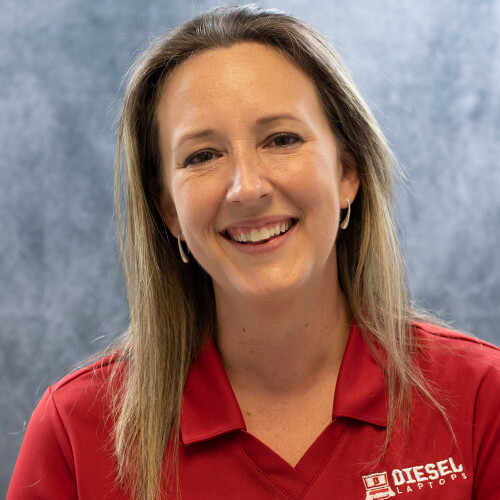
Diesel Laptops grew quickly from a small, early-stage team into an industry leader serving customers across complex diesel and off-highway equipment environments. As the company scaled, institutional knowledge didn’t.
A small group of long-tenured employees, including VP of IT Stacy Rodabaugh, became the default source of truth for how systems worked, why decisions were made, and how edge cases should be handled. Questions constantly funneled back to the same people, creating bottlenecks and slowing teams down.
“For a long time, we were the keepers of all the knowledge. Everyone would come to us — ‘Why is this like this?’ ‘Can you remind me how to do that again?’ It just becomes overwhelming.”
Diesel Laptops had tried building internal knowledge bases more than once. Each attempt followed a similar pattern:
Without consistency or an easy way to update documentation, knowledge systems became liabilities instead of assets.
Some of Diesel Laptops’ most valuable knowledge lives with diesel mechanics and highly specialized technicians. But asking those experts to sit down and write detailed instructions for non-experts simply didn’t work.
The business needed a way to extract expert knowledge quickly, translate it into clear, repeatable steps, and make it usable by IT support and customer service teams — without pulling experts away from their core work.
Diesel Laptops adopted Scribe as the fastest way to document workflows directly from real work. Instead of writing long process documents, subject matter experts simply walk through a task on screen while Scribe automatically generates step-by-step guides.
“Our diesel mechanics have incredible knowledge in their heads. But they’re not natural documenters. Having them walk through it while Scribe captures everything — that’s what made this possible.”
From there, IT leaders lightly edit for clarity and consistency, then documentation is stored in shared repositories (SharePoint and Google Drive). After that, teams can reuse, update, and share guides as processes evolve.
This dramatically lowered the barrier to creating and maintaining documentation.
Scribe became the standard documentation format across multiple departments, who used Scribe for:
Because every guide follows the same clear structure, documentation stays usable — even as it changes.
Diesel Laptops connects Scribe documentation to its AI-enabled support workflows using Dialpad, ChatGPT, and Scribe together.
Documentation stored in Google Drive is scraped by AI tools within their phone and chat platforms, allowing support reps to surface the right steps while actively helping customers instead of searching manually or escalating to specialists.
After implementing Scribe, restructuring how knowledge was captured and shared, and overhauling their ‘War Room’ processes, Diesel Laptops saw immediate impact. In just one week, the team achieved a 44.3% improvement in first call resolution, helping customers get answers faster without increasing headcount.
Standardized, up-to-date documentation made it easier to train new hires and reduced reliance on long-tenured employees as the sole source of truth.
For Stacy and her team, this meant fewer interruptions and more confidence that knowledge would persist, even as roles and tools change.
By capturing diesel technician workflows in Scribe and refining them for clarity, Diesel Laptops enabled IT support teams to resolve issues they previously couldn’t without a specialist on every call.
This unlocked: more consistent support experiences, reduced expert bottlenecks, and a clear path toward customer self-service documentation.
“It takes a lot off of me. I’ve been here almost ten years — I hold a lot of information. Being able to document it once and know it’s there? That’s massive.”
Unlike previous knowledge base attempts, Scribe’s consistent format and ease of updating gave Diesel Laptops a sustainable way to maintain documentation as processes evolve, without letting information decay over time.
Diesel Laptops continues to expand its documentation strategy to support:
Read about how Scribe can help