



Meet
Autocapture


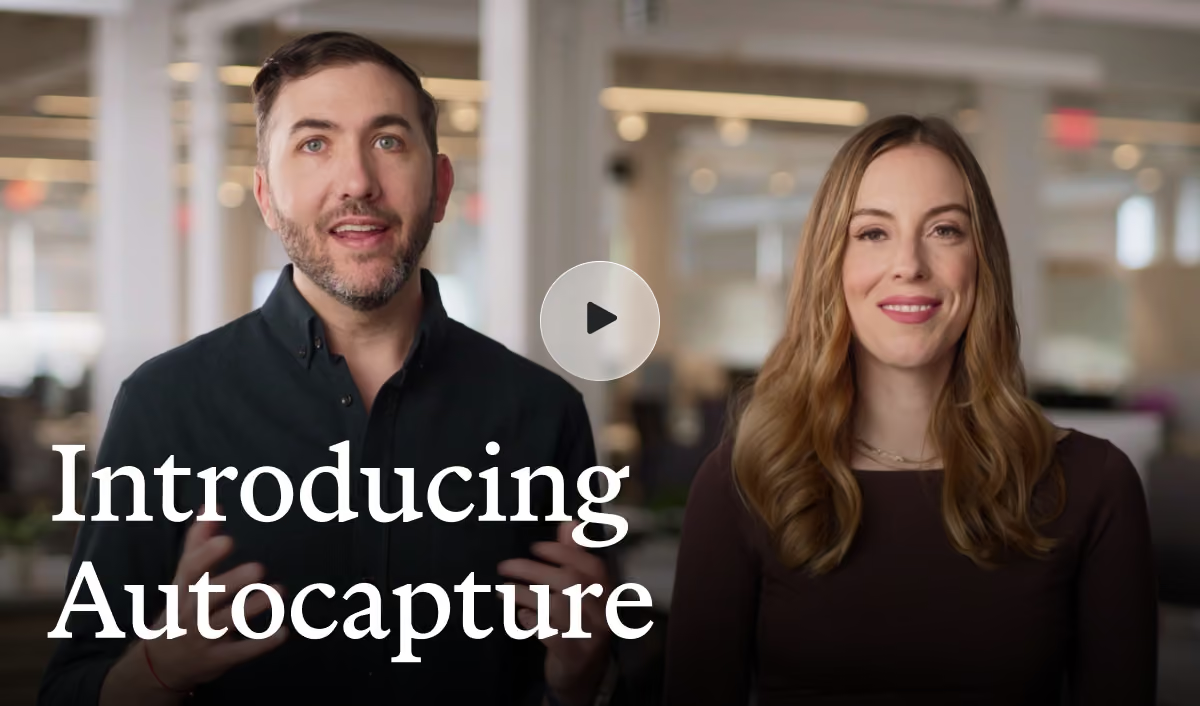
KLN Family Brands makes its new applications self-documenting with Scribe Autocapture
After shipping 23 internal applications in six months with AI-assisted development, KLN's IT team needed documentation to keep pace. With Autocapture, the team can capture the knowledge behind those applications while they're being built.


Summary
KLN Family Brands has used Scribe for years to make documentation easier to create across the business.
Now, the pace of development is changing. In the past six months, KLN’s IT team has used AI to help build 23 new internal applications. The team is building faster than ever, but doesn't have enough time to develop, support, and document everything it ships.
With Scribe Autocapture, KLN can capture the knowledge created as the team builds and tests, so developers do not have to stop and decide what needs to be documented first.
“Autocapture comes at a perfect time for us because it can self-document some of these applications as we’re testing them and demoing them to our users. It essentially makes our new applications self-documenting.”

Challenge
AI helped KLN build applications faster, but the knowledge behind those applications was getting harder to keep up with.
KLN Family Brands had already experienced the burden of documenting a major ERP rollout. The system it was replacing was, in Drew Johnson's words, "very archaic": a terminal-based tool with no real user interface.
At the time, the team's only option was to ask subject matter experts to write SOPs by hand in Word and PowerPoint, on top of learning the new system itself.
"We realized pretty quickly that wasn't feasible," Drew said. "We were asking them to take a lot of time out of their day, while they were also learning a brand-new ERP."
The result was documentation created mostly out of necessity, with just enough to get by.
"I don't think we necessarily had enough documentation. There wasn't enough for us to be truly effective."
By the time KLN moved to its cloud-based ERP, Scribe had changed that process enough that creating a Scribe became a formal go-live requirement. Each area had to have its documentation ready before it could sign-off on the rollout.
As a result, adoption of Scribe continued to spread beyond the ERP rollout.
"It was unbelievable how quickly it took off," Drew said.
More recently, AI-assisted development changed the pace again.
Over the past six months, KLN's application development team used AI to help build 23 new internal applications across everything from CRM to expense reimbursement to internal LLM tools.
That helped the team build faster, but it also created a new documentation challenge. The applications were becoming more complex, with more happening behind the scenes that end users did not necessarily understand.
“In the past six months, we've really started to use AI to help with development, as I think everybody else has. We've implemented 15 to 23 new applications since the beginning of March of this year, so our applications are growing so quickly, but we don't have the time to build the applications, support them post go-live, and also document them.”
Solution
Autocapture lets KLN Family Brands document its new applications as the team builds them, without requiring developers to stop and decide in advance what needs to be captured.
Drew signed up as an early adopter of Autocapture, Scribe's newest Capture feature, which maps workflows as they happen across the applications his team already uses to turn into guides in one click.
What caught his attention was that he no longer had to decide what to document before the work happened.
Instead, Autocapture could just capture the work his team was already doing as it built and tested applications, then create the documentation from it.
“I remember first seeing Scribe say, 'Here's something you do regularly, you might want to create a Scribe out of it.' I thought it would be really cool if it would actually just create this Scribe for me rather than suggest I create a Scribe. And then they showed me Autocapture. That's such a huge leap for us.”
That matters even more because the person building an application does not always know which parts will be unfamiliar to someone using it for the first time.
"I build something in a way that it works in my head, but for our end user it might not necessarily click for them that same way. So Autocapture, being able to grab this documentation and create it for our end users while we're building it, becomes invaluable. It might not be something that I always think needs to be documented, but our end user would find it very valuable."
AI helps KLN build software faster, but it does not automatically capture the KLN-specific knowledge behind how that software is used. That specialized intelligence is what Autocapture preserves as the work happens.
Results
KLN’s application development team can now capture documentation alongside the work of building and testing new tools, so more of that knowledge is ready when applications go live.
"Scribe helps self-document some of these applications that we're building, taking away the need for the IT department to develop, test, implement, and document them. Scribe will have that documentation waiting for us post go-live, so we can get users up and running faster from day one."
That builds on a strong documentation habit already established across KLN. Teams have created more than 1,000 Scribes, with guide creation up 78% since January 2026 as adoption continues to grow across the business.
As KLN builds more AI-supported applications, Autocapture gives the team a way to keep adding to that knowledge without relying on developers to document everything manually.
The same idea is already shaping how Drew thinks about KLN’s next AI project, a forecasting and scheduling module. The people closest to the project understand it deeply today, but that knowledge becomes harder to preserve as roles change and teams move on.
“If they're out of the office, if they move on to another role in the company, or if they just aren't responsible for that part of it anymore, having Scribes to explain how the product works, why it works the way it does and how to use it is going to make our investment in that AI application really stick over the years, rather than just kind of fading away as personnel moves around throughout the company.”
For KLN, that is where the value compounds. Each workflow captured adds to the company’s specialized intelligence, giving future employees more of the content they need without relying on the person who originally built the application to still be there.
As KLN expands Autocapture beyond the application development team, the goal is simple: Keep the knowledge behind its applications moving as fast as the applications themselves.