



Meet
Autocapture



.avif)
February 5, 2026
How to Build an “Ops Brain”: Turning Workflow Chaos into Scalable SOPs
Turn scattered workflows into scalable SOPs by building an ops brain. Learn how to document, organize, and systematize operations so your team runs without you.
In this article

Instantly capture and optimize workflows so your team works smarter and faster.
As teams grow, workflows get more complex… fast.
Processes live in people’s heads.
Questions bottleneck around a few experts.
Training happens through Slack messages, meetings, or shadowing.
In a recent Scribe Society webinar, Luis Barés, Founder & Chief Strategist of Law Firm Architects and Scribe power user, shared how he built what he calls a “Law Firm Brain”: a centralized system for capturing operational knowledge and turning workflow chaos into scalable SOPs.
What is Law Firm Architects?
Law Firm Architects is a legal design agency that applies legal design inside private law firms, focusing on how firms operate day to day, not just how law is experienced at the edges of the justice system. While much of legal design has historically focused on courts, policies, and public access to justice, Law Firm Architects applies legal design to law firm operating models aligning people, processes, and technology so that law firms can deliver high-quality legal services without chaos or burnout. The Law Firm Architects team tag line says it all: We Design Law Firms That Don’t Run on Burnout®
While Luis applies this framework in law firms, the approach works for any operations team looking to improve process documentation, onboarding, and execution at scale. His experience at NASA as former Head of Customer Experience (CX) and later at Pfizer leading Service Design proved that these ideals and frameworks can be effective across industries.
The core problem: growth without process documentation
Most teams don’t struggle because they lack talent.
They struggle because they lack shared clarity.
Before building a “brain,” Luis saw common operational issues:
- Workflows existed, but weren’t documented
- Training relied on tribal knowledge
- Small changes caused outsized confusion
- Processes evolved, but documentation didn’t
This isn’t a legal problem.
It’s an operations and knowledge management problem.
When teams scale without documenting how work actually gets done, execution slows — and risk increases.
The idea behind the “Ops Brain”
The “Law Firm Brain” isn’t a single SOP or master document.
It’s a living system of process documentation that answers one core question:
How does this work actually get done — step by step?
Using Scribe, Luis captured workflows as they happened, not after the fact. That made documentation faster, more accurate, and easier to keep up to date.
Over time, these Scribes became a shared source of truth, a searchable “brain” the team could rely on. Let’s take a look at Luis’ steps to building your own version!
Step 1: Document real workflows, even when they’re messy
A key insight from Luis:
Don’t wait for perfect processes.
Early Scribes captured incomplete workflows, inconsistent steps, and, “this usually works” processes in real-time. It was a way for Luis and his team to see how work really happens, not the idealized version often found in SOPs.
That was intentional.
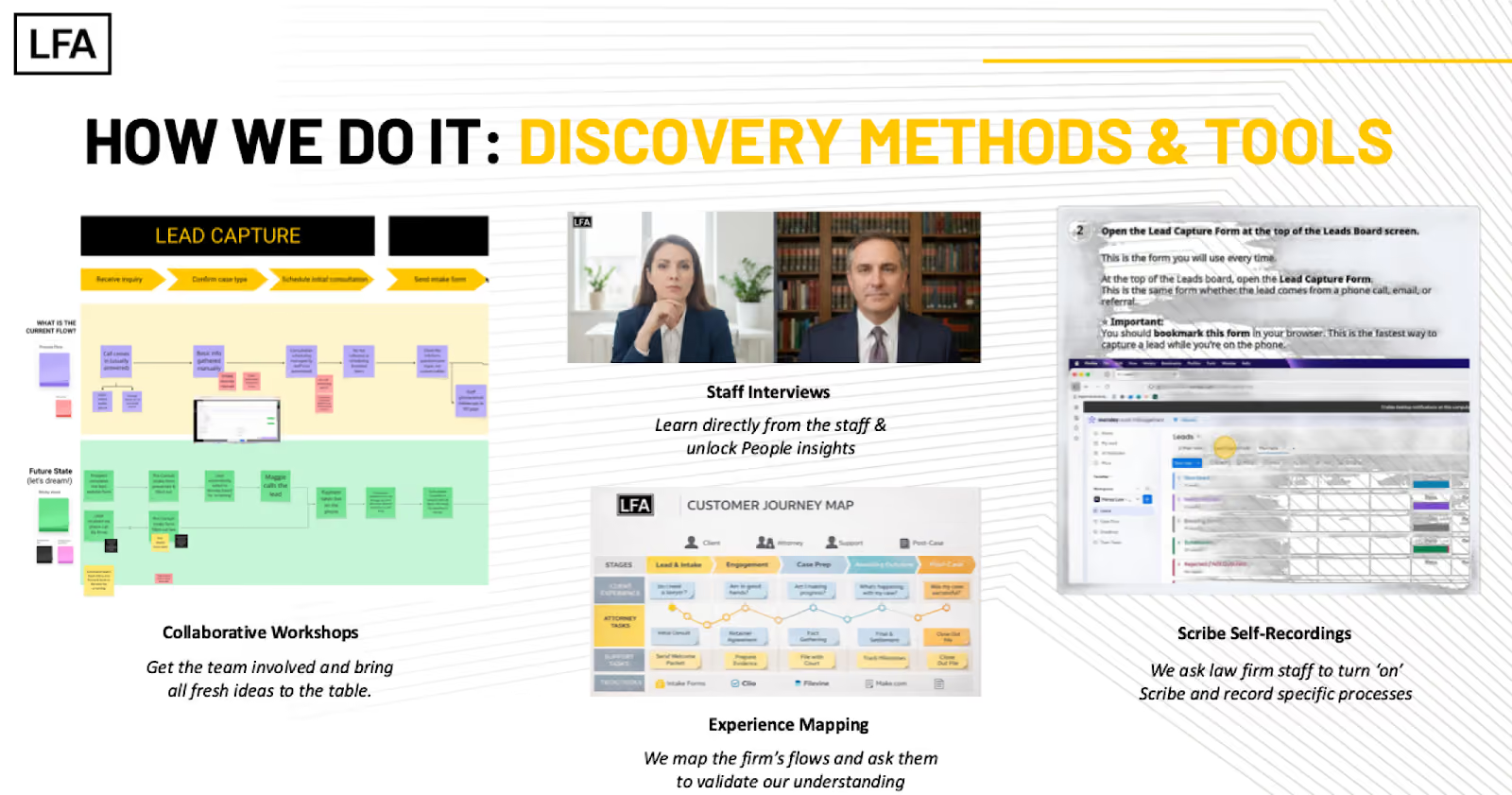
Once workflows were visible, teams could spot inefficiencies, align on best practices, and start to improve processes collaboratively
Scribe made invisible work visible, which is the first step to scaling it.
Step 2: Break processes into small, reusable SOPs
Instead of creating massive SOP documents, Luis focused on atomic workflows:
- how to open a matter
- how to submit a filing
- how to complete a recurring task
- how to handle a specific request
Each Scribe answered one question clearly.
This modular approach makes SOPs easier to reuse, update, and eventually combine into larger workflows.
It’s what turns documentation into a scalable system instead of a static archive.
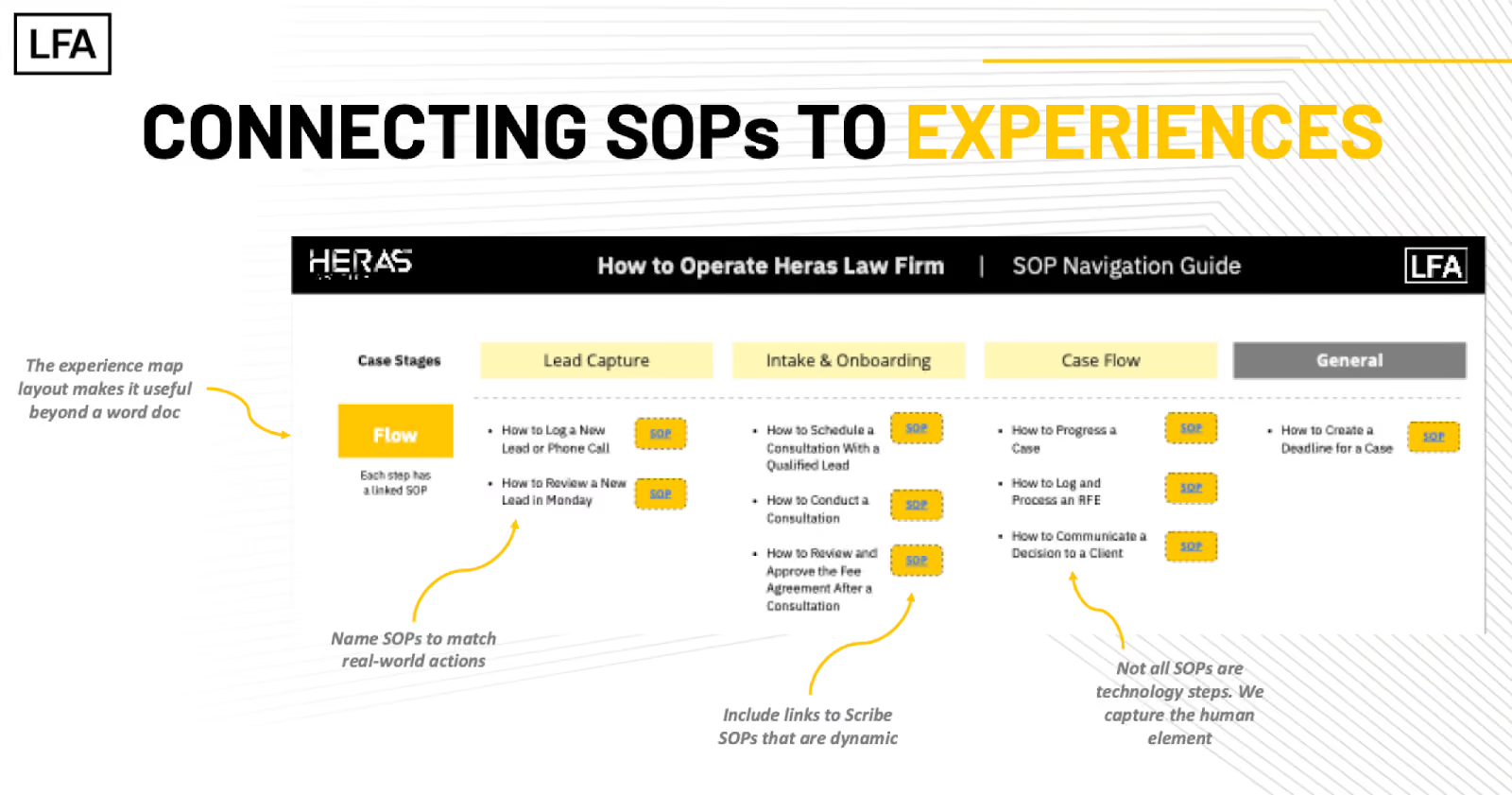
Step 3: Organize SOPs around outcomes, not roles
One of the most transferable lessons:
Organize documentation by what needs to happen, not who does it.
Instead of folders like:
- “Admin SOPs”
- “Associate Workflows”
- “IT Processes”
Luis grouped Scribes by:
- workflow stages
- operational functions
- repeatable outcomes
This structure holds up as teams grow, roles change, and responsibilities shift, which is critical for long-term scalability. Experience is the best organizer of an SOP. It’s how we think as humans, and how we most effectively find information.
Step 4: Make SOPs part of daily operations
SOPs only work if people actually use them.
Luis embedded Scribes into:
- onboarding flows
- internal checklists
- recurring processes
- day-to-day execution
Because Scribes are visual and step-by-step, they reduced interruptions, rework, and the dreaded, “can you show me again?” questions.
Over time, the Ops Brain became the default reference, not an extra step.
Step 5: Treat SOPs as a living system
Traditional documentation breaks because it’s hard to maintain.
Scribe changes that.
Instead of rewriting entire SOPs, teams could re-record only the steps that changed, keep the rest of the workflow intact, and instantly update every place the Scribe was shared when using Live Links or embedding Scribes/Pages where the team actually works
This made process documentation sustainable, even as tools, regulations, and workflows evolved.
Why this works for any operations team
While this system started in a law firm, the framework applies broadly to:
- operations teams
- finance and compliance
- customer support
- IT and internal tools
- agencies and professional services
Any team dealing with repeatable workflows, growing headcount, or high context or risk can benefit from building their own Ops Brain.
Final takeaway
Scaling operations isn’t about documenting everything.
It’s about:
- capturing real workflows
- breaking them into reusable pieces
- organizing them logically
- and keeping them easy to update
That’s how teams turn chaos into clarity, and build an Ops Brain that actually works.
Questions for Luis?
You can find Luis Barés on LinkedIn, and by visiting the Law Firm Architects website.
Catch the full session down below. 👇

.avif)

Ready to try Scribe?


Copyright © 2026 Colony Labs, Inc. dba Scribe. All rights reserved.